Best Luxury Suites United States: The Definitive Guide
The upper tier of American hospitality represents a complex intersection of real estate engineering, architectural history, and ultra-high-net-worth operational logistics. When private family offices, corporate boards, or discerning travelers evaluate premier domestic accommodations, they look past traditional marketing terminology. Instead, they examine spatial sovereignty, acoustic isolation, and the fidelity of multi-layered service models. These top-tier assets operate as self-contained micro-ecosystems within dynamic urban skylines and sprawling rural retreats, governed by intricate yield protocols that remain invisible to standard booking channels.
Furthermore, the domestic market for elite accommodations has evolved away from uniform corporate luxury toward regional vernacular expression, biometric-secured access cores, and hyper-personalized in-suite programming. The financial footprint of these stays extends far beyond baseline nightly tariffs, encompassing dedicated butler teams, secure subterranean arrival zones, and private aviation coordination. Consequently, evaluating this asset class requires moving beyond glossy promotional brochures to analyze structural integrity, service-to-guest ratios, and spatial provenance.
Navigating this specialized segment demands a rigorous framework on identifying and deploying accommodation portfolios across diverse metropolitan, coastal, and alpine environments. Whether orchestrating a sensitive executive deployment or examining the pinnacle of residential-style hotel architecture, understanding the mechanical realities of premier American hospitality remains essential. Ultimately, this analysis provides an objective examination of administrative safeguards, spatial typologies, and operational controls required to govern elite domestic properties with absolute editorial precision while maintaining strict structural constraints.
Understanding “best luxury suites united states”
The phrase best luxury suites united states is frequently co-opted by algorithmic aggregators and automated lifestyle blogs that prioritize high-volume keyword repetition over editorial substance or architectural insight. Therefore, these superficial guides ignore the structural realities of hotel management, proprietary inventory holds, and unlisted high-rolling client allocations. In professional travel curation and asset evaluation, however, evaluating best luxury suites united states demands a rigorous examination of clear verifiable metrics, including square-footage-to-staff ratios, acoustic dampening engineering, and private elevator access cores. A common misunderstanding assumes that the highest published nightly rate automatically correlates with superior spatial quality or service delivery. Consequently, observers often overlook how promotional pricing and unlisted allocations distort the true value of landmark properties.
Analyzing these intricate hospitality markets requires understanding the systemic tension between commercial profitability and elite residential comfort. For instance, an analytical planner attempting to secure a multi-story penthouse in Manhattan or Las Vegas will find that standard booking channels display zero availability due to permanent holds for heads of state or VIP gaming clients. Analysts who rely on public reservation portals frequently miss these critical inventory dynamics. Therefore, mastering the complexities of top-tier domestic assets involves examining how general managers, private concierge desks, and estate asset managers interact. Ultimately, this collaboration establishes optimal booking pathways, transparent ancillary inclusions, and long-term asset value across vastly different regional markets.
Deep Contextual Background
The historical evolution of ultra-luxury lodging in the United States traces its roots to the grand palace hotels of the late nineteenth and early twentieth centuries, such as the Plaza in New York, the Fairmont in San Francisco, and the Palmer House in Chicago. During this foundational era, opulent suites were designed to serve as permanent or semi-permanent residences for industrial magnates and visiting European royalty who traveled with large domestic staffs. Consequently, spatial planning focused on grand entertaining salons, private dining rooms, and servants’ quarters integrated directly into the suite footprint.
Throughout the late twentieth century, the rise of branded luxury hotel chains and corporate globalization transformed suite architecture. Properties shifted away from heavy Victorian drapery and multi-room domestic staff layouts toward sleek, contemporary layouts emphasizing state-of-the-art entertainment technology, spa-grade bathrooms, and flexible multi-bay configurations. Today, examining the domestic landscape requires navigating a mature, highly competitive industry where architectural pedigree, privacy fortifications, and bespoke art curation define the baseline of premier accommodations.
Conceptual Frameworks and Mental Models
Analyzing the operational excellence and spatial quality of premier American suites relies on several structured mental models:
-
The Spatial-to-Staff Ratio Index: Measures the number of dedicated butler, culinary, and security personnel assigned per guest relative to the total square footage of the suite.
-
The Acoustic and Visual Isolation Matrix: Evaluates structural dampening materials, private elevator cores, and perimeter shielding that insulate the suite from external noise and observation.
-
The Architectural Provenance Model: Assesses the design significance of legendary architects and interior designers associated with the creation of the physical space.
-
The Ancillary Integration Gradient: Quantifies the seamless inclusion of private airport transfers, in-suite dining preparation, and bespoke wellness equipment within the baseline tariff.
Key Categories or Variations
| Suite Typology | Primary Geographic Hub | Core Trade-Off or Constraint |
| Urban Skyscraper Penthouses | New York, Chicago, Houston | Towering altitude and iconic skyline views offset by restricted outdoor space |
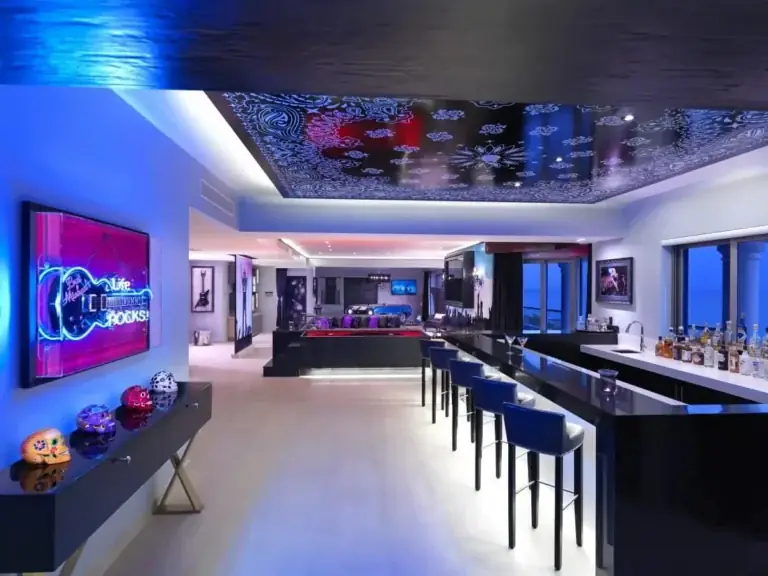
| Integrated Resort Sky Villas | Las Vegas, Atlantic City | Massive square footage and entertainment amenities balanced against high public foot traffic |
| Historic Architectural Suites | San Francisco, Boston, Savannah | Rich cultural heritage and antique detailing offset by modern spatial constraints |
| Coastal Biomorphic Estates | Big Sur, Maui, Miami Beach | Direct ocean integration and private infinity pools balanced against weather exposure risks |
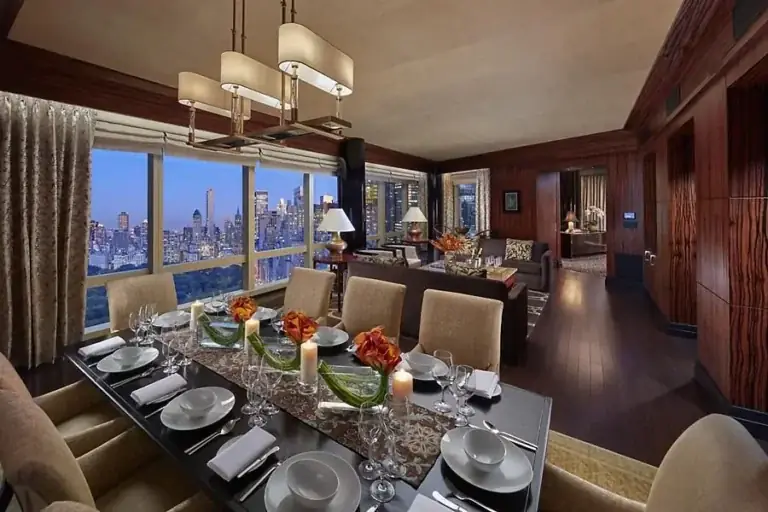
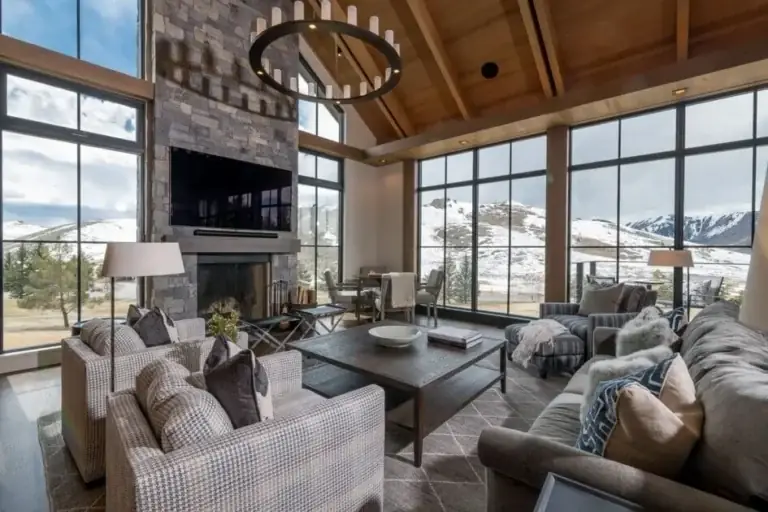
| Mountain Alpine Chalet Penthouses | Aspen, Vail, Park City | Ski-in/ski-out convenience and vaulted timber construction offset by seasonal pricing spikes |
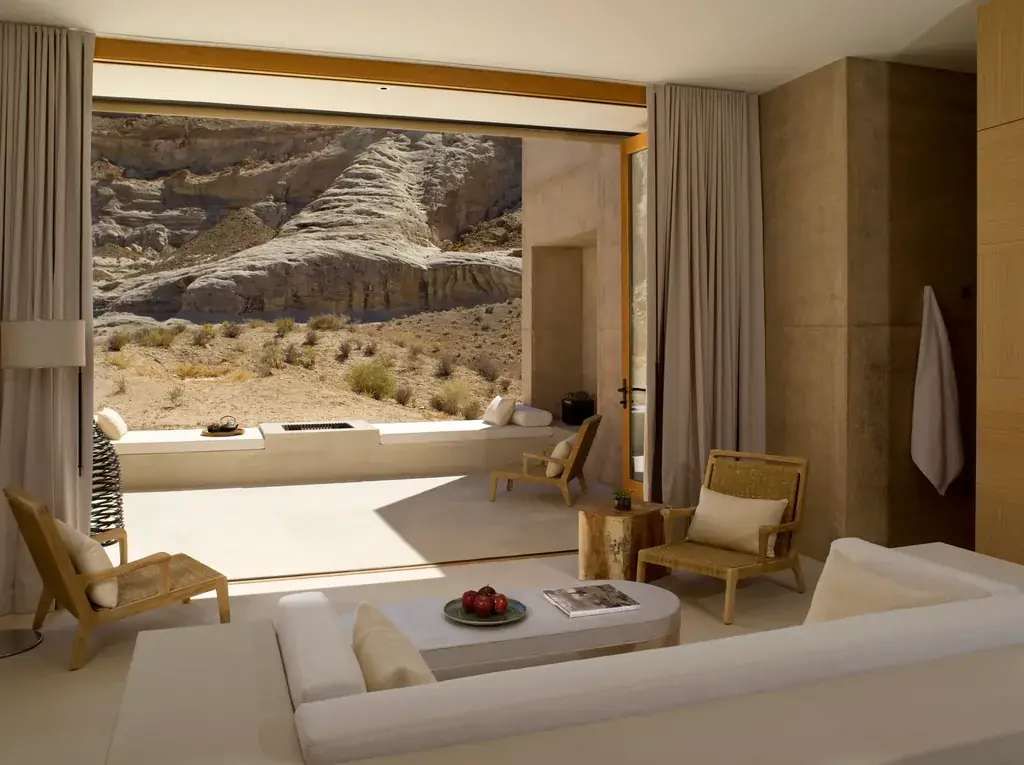
| Desert Sanctuary Pavilions | Scottsdale, Tucson, Palm Springs | Complete seclusion and architectural minimalism paired with extreme climate management |
When applying decision logic to these variations, discerning travelers and executive assistants must align suite typologies with the explicit objective of the stay. Urban skyscraper penthouses suit high-level corporate delegations and media events requiring centralized metropolitan access. Conversely, coastal biomorphic estates and mountain alpine chalets attract private families and executives prioritizing absolute seclusion, wellness restoration, and nature integration over urban proximity.
Detailed Real-World Scenarios
Securing a Multi-Bay Urban Penthouse for a Private Family Office Delegation
A multi-national family office coordinates a week-long strategic summit in Manhattan, requiring a secure, highly controlled environment for sensitive financial discussions.
-
Constraint: Standard hotel floors expose executives to public elevator banks and unvetted foot traffic from conference attendees.
-
Failure Mode: Relying on standard connecting rooms results in acoustic bleed, compromised document security, and fragmented hospitality service.
-
Decision Point: Secure a multi-thousand-square-foot duplex penthouse equipped with a private keycard-locked elevator landing, an internal boardroom table, and a dedicated pantry serviced by a private butler team.
Coordinating an Architectural Estate Stay for a Milestone Cultural Celebration
A private collector plans a milestone family anniversary at a premier coastal resort in California, requiring both expansive entertaining space and residential privacy.
-
Constraint: Standard resort villas lack sufficient dining capacity for private chef-led banquets and custom art displays.
-
Failure Mode: Booking standard resort rooms forces the celebration into public hotel dining spaces, destroying privacy and intimacy.
-
Decision Point: Reserve a detached oceanfront villa featuring a private wrap-around terrace, a commercial-grade back-of-house kitchen, and direct beach access segregated from the main resort crowds.
Planning, Cost, and Resource Dynamics
Executing a comprehensive strategy focused on experiencing top-tier domestic assets involves balancing premium nightly tariffs against the extensive array of included concierge, culinary, and security assets. The economic model requires assessing indirect costs, such as private jet positioning, security detail lodging, and bespoke service tips, against the baseline room rate.
| Economic Variable | Financial Variability | Strategic Impact on Suite Selection |
| Base Nightly Suite Tariff | Extreme Market Variability | Direct cash outlay covering spatial occupancy and core property amenities |
| Dedicated Butler and Security Staffing | Fixed Daily Surcharge or Inclusion | Ensures immediate response times and absolute physical privacy |
| Private Aviation and Ground Transfer Coordination | Variable Logistics Cost | Bridges the gap between remote tarmac arrival and secure suite entry |
| In-Suite Culinary and Beverage Provisioning | Consumption-Based Outlay | Customizes dining experiences without requiring public restaurant visits |
Tools, Strategies, and Support Systems
-
Private-Client Travel Advisory Networks: Specialized human-led agencies maintaining direct channels with property general managers and unlisted inventory allocators.
-
Secure Communications and Itinerary Portals: Encrypted digital platforms organizing complex multi-city private travel logistics for high-net-worth individuals.
-
Architectural and Spatial Asset Databases: Curated documentation tracking the square footage, floor plans, and design provenance of premier hotel suites.
-
Direct Property Sales Team Directories: Maintained contact directories linking planners directly to directors of sales and VIP guest relations.
-
Helipad and Private Tarmac Coordination Desks: Specialized logistical teams managing direct helicopter transfers from regional airports to urban hotel helipads.
Risk Landscape and Failure Modes
The primary operational hazard inherent in top-tier suite occupancy involves privacy breaches and unauthorized media intrusion. When high-profile executives or public figures occupy prominent urban penthouses with vulnerable glass facades, inadequate window tinting or unmonitored adjacent sightlines can compromise sensitive operational security.
Another compounding risk relates to service friction during peak operational windows. Even the most prestigious properties can experience butler staffing shortages or kitchen bottlenecks during major holiday periods or citywide conventions, leading to a degradation of the hyper-personalized service expected at this price point. Rigorous pre-arrival communication and service level agreements help neutralize this exposure.
Governance, Maintenance, and Long-Term Adaptation
Sustaining long-term excellence within elite hotel suite portfolios requires a disciplined asset management cadence. Property ownership groups must institute rigorous preventative maintenance cycles, refreshing custom textiles, acoustic dampening panels, and smart-room automation systems during low-occupancy windows without disrupting high-paying guests. If luxury consumer expectations shift toward enhanced wellness technology or sustainable building materials, properties must adapt their capital expenditure programs proactively.
Furthermore, suite governance must adapt to evolving cybersecurity standards, guest privacy regulations, and changing architectural trends. This involves maintaining ongoing dialogues with master designers, upgrading in-suite digital encryption networks, and retraining hospitality personnel in discretion protocols. Proactive governance safeguards property valuation and ensures consistent guest satisfaction across generations of travelers.
Measurement, Tracking, and Evaluation
-
Guest Satisfaction and Personalization Index: Measures qualitative feedback from elite travelers regarding the accuracy of pre-arrival preference profiling.
-
Service Latency and Response Time Metrics: Tracks the duration required for butler and concierge teams to fulfill custom in-suite requests.
-
Spatial Integrity and Maintenance Audit Score: Evaluates physical wear, technology functionality, and architectural finish quality across suite inspections.
-
Repeat Occupancy and Loyalty Retention Rate: Quantifies the percentage of high-net-worth guests who return to the specific suite portfolio across multiple calendar years.
Common Misconceptions and Oversimplifications
-
Myth: The most expensive suite in the United States is always the best architectural and spatial experience available. Reality: Price tags in markets like Las Vegas or New York often reflect entertainment assets or casino comp structures rather than pure residential luxury.
-
Myth: Booking a luxury suite automatically grants the guest complete immunity from resort noise and public foot traffic. Reality: Poorly designed vertical hotel cores can route public elevator traffic directly past suite entryways, disrupting privacy.
-
Myth: All five-star hotel brands maintain identical standards for their highest-tier presidential suites. Reality: Suite quality varies wildly depending on whether the property is managed by an independent boutique operator or a massive global conglomerate.
-
Myth: Private butler service in an American luxury suite operates identically to traditional European estate butlerage. Reality: American hotel butlers focus primarily on administrative coordination, unpacking, and reservation management rather than formal household service.
-
Myth: High-end hotel suites are permanently occupied and impossible for independent travelers to reserve. Reality: Strategic booking during shoulder periods or leveraging direct relationships with hotel sales directors grants access to premier inventory.
-
Myth: Digital photographs on hotel websites accurately represent the true scale and lighting of a luxury penthouse. Reality: Professional architectural photography often utilizes wide-angle lenses and optimal natural lighting that exaggerate spatial dimensions.
Ethical, Practical, or Contextual Considerations
Evaluating top-tier accommodations also intersects with broader socioeconomic discussions surrounding resource consumption, land use, and urban development. As flagship properties command nightly rates exceeding entire annual salaries, critics occasionally question the ecological and social impact of sprawling resort estates and urban penthouses. Progressive hospitality operators address these concerns by investing in sustainable construction practices, supporting local community workforce development initiatives, and implementing rigorous energy-reduction technologies within their most extravagant residential footprints.
Conclusion
Mastering the complexities involved in identifying and securing elite domestic accommodations requires an uncompromising analytical perspective. True authority in this domain involves looking past promotional marketing imagery to examine architectural provenance, spatial-to-staff ratios, and acoustic engineering. By approaching premier American accommodation selection with professional rigor and intellectual honesty, travelers and asset managers ensure that their investments in time and capital deliver restorative value and enduring excellence.