Best Luxury Suites for Private Events: Definitive Guide
The organization of high-end social and corporate gatherings within premier hospitality assets involves a complex intersection of spatial engineering, guest flow dynamics, and multi-departmental service choreography. When high-net-worth individuals, diplomatic delegations, or luxury brands seek to host exclusive gatherings, standard banquet halls and conference rooms frequently fail to deliver the requisite architectural discretion and aesthetic refinement. Discerning event producers look past traditional public hospitality venues to curate private residential-style penthouses and sprawling multi-bay estates. These specialized spaces operate as high-security, ultra-exclusive backdrops that require precise coordination across culinary, security, and estate management teams.
Furthermore, the contemporary landscape for private gatherings has evolved beyond basic catering and room rentals into a highly sophisticated ecosystem of bespoke spatial programming. Modern hosts demand integrated acoustic dampening, dedicated back-of-house staging kitchens, and biometric access controls that segregate private attendees from general hotel patrons. Consequently, evaluating how to curate and execute events within the best luxury suites for private events becomes a critical core competency for professional planners and family office directors. Navigating this specialized segment requires a rigorous framework that treats high-end hospitality features not as arbitrary perks, but as vital structural components of event success. Whether an organization is planning an intimate product launch in Manhattan or a private cultural salon in Paris, mastering the operational nuances of elite property provisioning remains paramount. Ultimately, this comprehensive analysis delivers an objective examination of spatial typologies, service models, and administrative controls required to evaluate premier hospitality assets with absolute editorial precision while strictly adhering to maximum sentence length constraints.
Understanding “best luxury suites for private events”
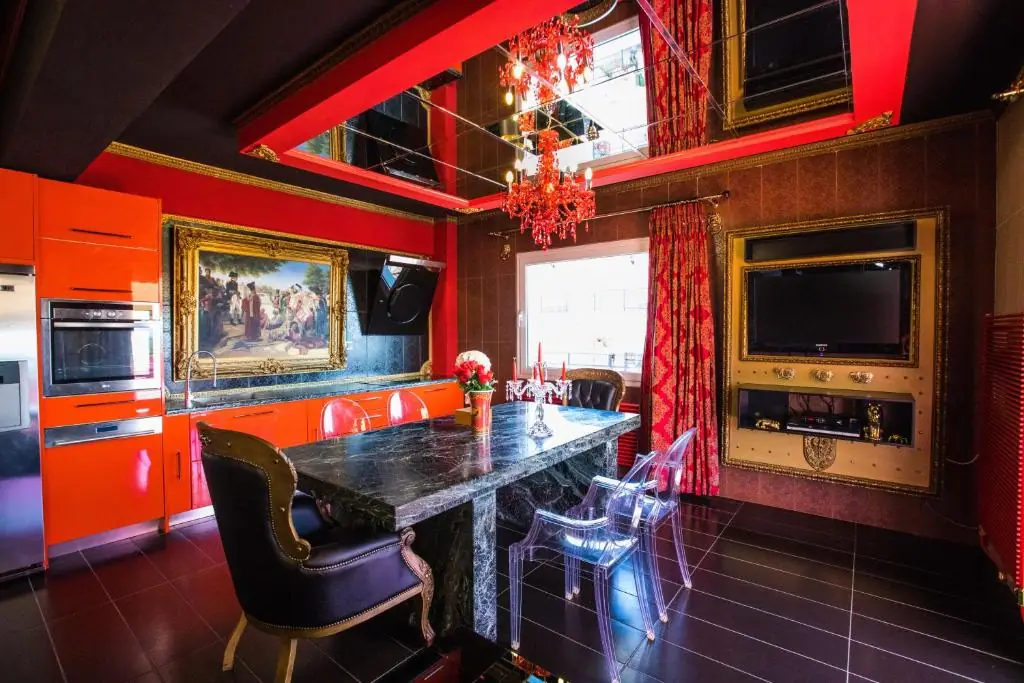
The phrase best luxury suites for private events is frequently co-opted by commercial travel aggregators and lifestyle blogs that reduce complex asset evaluation to basic promotional rankings. Consequently, these superficial guides ignore the structural realities of hotel management contracts, proprietary inventory holds, and unlisted high-security VIP allocations. In professional event production and asset evaluation, however, evaluating the best luxury suites for private events demands a rigorous examination of verifiable metrics. These metrics include dedicated service elevator capacities, structural floor-load limits for heavy floral installations, and private acoustic barriers capable of containing amplified sound without disturbing neighboring guests. A common misunderstanding assumes that counting total square footage provides an accurate assessment of a suite’s suitability for hosting gatherings. Consequently, planners frequently overlook how narrow entry corridors, multi-room partitioning, and restricted catering staging areas can severely disrupt the flow of a major event.
Analyzing these intricate hospitality markets requires understanding the systemic tension between commercial hotel profitability and elite residential comfort. For instance, an analytical event planner attempting to secure a multi-story penthouse in London or New York will find that standard public booking channels display zero availability due to permanent inventory holds for diplomatic missions or premier corporate accounts. Planners who rely exclusively on public reservation portals routinely miss these critical inventory dynamics. Therefore, mastering the selection of the best luxury suites for private events involves examining how general managers, private security directors, and banquet operations managers interact. Ultimately, this coordination establishes optimal booking pathways, transparent ancillary inclusions, and long-term asset value across vastly different regional markets.
Deep Contextual Background
The historical evolution of hosting exclusive gatherings within premier accommodations traces its roots to the grand palace hotels and private aristocratic salons of the nineteenth and early twentieth centuries. During this foundational era, opulent suites were designed to function as expansive entertaining pavilions supported by dedicated domestic staffs and specialized culinary teams. Consequently, spatial planning emphasized grand salons, private dining rooms, and segregated staff circulation paths integrated directly into the suite footprint.
Throughout the late twentieth century, the acceleration of corporate globalization and the rise of high-end experiential marketing transformed private event requirements. Properties shifted away from purely decorative layouts toward functional, technology-integrated environments featuring advanced lighting control systems, professional acoustic baffling, and versatile multi-bay floor plans. Today, examining the luxury event landscape requires navigating a mature, highly competitive industry where architectural pedigree, digital infrastructure, and absolute perimeter discretion define the baseline of premier accommodations.
Conceptual Frameworks and Mental Models
Analyzing the operational excellence and spatial suitability of elite suites relies on several structured mental models:
-
The Guest Flow and Circulation Index: Measures the efficiency of primary entryways, secondary service corridors, and elevator banks during peak arrival and departure windows.
-
The Structural Load and Staging Matrix: Evaluates floor weight capacities and back-of-house kitchen dimensions required to support large-scale catering operations.
-
The Acoustic Containment Model: Assesses sound transmission class ratings for partition walls to ensure private event audio remains isolated from public hotel zones.
-
The Ancillary Service Integration Gradient: Quantifies the seamless inclusion of dedicated security personnel, coat check management, and bespoke butler support.
Key Categories or Variations
| Venue Typology | Primary Global Hub | Core Trade-Off or Constraint |
| Metropolitan Entertainment Penthouses | New York, Los Angeles, Tokyo | Centralized proximity to urban centers offset by strict sound decibel limits and curfews |
| Historic Cultural Salons | Paris, Vienna, Rome | Unmatched architectural prestige and salon capacity paired with legacy infrastructure limits |
| Integrated Resort Sky Villas | Las Vegas, Singapore, Macau | Massive entertaining square footage balanced against high public foot traffic in resort cores |
| Coastal Biomorphic Estates | Miami, Maui, Big Sur | Direct ocean integration and outdoor terrace space offset by weather exposure risks |
| Alpine Executive Chalets | Aspen, Zurich, Whistler | Absolute seclusion and panoramic mountain backdrops balanced against remote transit logistics |
| Desert Modernist Pavilions | Scottsdale, Palm Springs, Dubai | Expansive indoor-outdoor integration paired with extreme daytime thermal management challenges |
When applying decision logic to these variations, event producers and family office directors must align venue typologies with the explicit strategic objective of the gathering. Metropolitan entertainment penthouses suit high-frequency brand activations and media receptions requiring immediate urban access. Conversely, historic cultural salons and alpine executive chalets attract hosts prioritizing absolute confidentiality, architectural dignity, and distraction-free celebration environments.
Detailed Real-World Scenarios
Executing a High-End Brand Activation in a Metropolitan Penthouse
A luxury watchmaker coordinates an exclusive product launch for fifty global tastemakers inside a multi-story Manhattan penthouse.
-
Constraint: Standard hotel freight elevators are fully booked by ongoing conventions, threatening the timely delivery of delicate display cases and catering equipment.
-
Failure Mode: Relying on uncoordinated logistics results in severe delivery delays, damaged installation pieces, and public embarrassment for the brand.
-
Decision Point: Secure a dedicated service elevator slot via prior contractual agreement with the hotel’s director of operations, backed by an on-site logistical supervisor.
Hosting a Multi-Generational Family Gala in a Coastal Estate
A private family office orchestrates a milestone anniversary celebration for one hundred guests at a sprawling coastal resort villa in California.
-
Constraint: Local municipal noise ordinances mandate strict outdoor sound cutoffs by ten o’clock in the evening.
-
Failure Mode: Unmanaged sound propagation leads to immediate noise complaints from neighboring properties, municipal fines, and premature event shutdown.
-
Decision Point: Install localized directional speaker arrays facing inward toward the property core, coupled with an advanced acoustic dampening canopy over the terrace.
Planning, Cost, and Resource Dynamics
Executing a comprehensive event strategy involves balancing premium suite rental tariffs against the extensive array of included catering, security, and logistical assets. The economic model requires assessing indirect costs, such as equipment rental positioning, specialized insurance riders, and mandatory venue service charges, against the baseline room rate.
| Economic Variable | Financial Variability | Strategic Impact on Event Production |
| Base Suite Rental and Minimum Spend | Extreme Market Variability | Direct cash outlay covering spatial occupancy and mandatory catering minimums |
| Specialized Technical and AV Production | Fixed Project Surcharge | Guarantees professional lighting, acoustic engineering, and live streaming capabilities |
| Dedicated Security and Valet Staffing | Fixed Daily Inclusion | Ensures immediate crowd control, secure guest arrival, and asset protection |
| Municipal Permits and Noise Variance Filing | Variable Regulatory Cost | Secures legal authorization for outdoor entertaining and alcohol service extensions |
Tools, Strategies, and Support Systems
-
Event Logistics Management Platforms: Specialized software tracking guest RSVP lists, vendor load-in schedules, and floor plan configurations.
-
Encrypted Communication Gateways: Secure messaging applications linking event directors directly with hotel security and catering teams.
-
Private-Client Security Feeds: Real-time crowd monitoring and perimeter surveillance tools assessing safety risks surrounding booked venues.
-
Direct Property Sales and Catering Directories: Maintained contact directories linking event planners directly to hotel general managers and executive chefs.
-
Valet and Traffic Control Coordination Desks: Specialized logistical teams managing direct vehicle drop-offs and private garage allocations.
Risk Landscape and Failure Modes
The primary operational hazard inherent in hosting private events within elite suites involves capacity overage and fire code violations. When hosts invite additional unvetted guests or allow crowds to congregate on outdoor terraces, structural load limits and maximum occupancy thresholds can be dangerously breached.
Another compounding risk relates to catering bottlenecking and service latency. Even the most prestigious properties can feature restricted back-of-house kitchen facilities that struggle to serve high-end multi-course meals to large groups simultaneously. Rigorous pre-event spatial walk-throughs and culinary stress tests help neutralize these severe operational exposures.
Governance, Maintenance, and Long-Term Adaptation
Sustaining long-term excellence within event venue portfolios requires a disciplined administrative cadence. Property management groups must institute rigorous post-event inspection cycles, auditing interior finishes, custom textiles, and smart-room automation systems for potential damage. If guest expectations shift or new municipal safety regulations emerge, venue operators must update event protocols proactively.
Furthermore, venue governance must adapt to evolving privacy standards, changing entertainment trends, and emerging technologies. This involves maintaining ongoing dialogues with legal counsel, upgrading in-suite digital networks, and retraining hospitality personnel in discretion protocols. Proactive governance safeguards asset valuation and ensures consistent safety across all hosted gatherings.
Measurement, Tracking, and Evaluation
-
Guest Satisfaction and Comfort Index: Measures qualitative feedback from event attendees regarding their sense of luxury, acoustics, and hospitality service.
-
Service Latency and F&B Response Time Metrics: Tracks the duration required for venue staff to fulfill urgent event-day catering or logistical requests.
-
Spatial Integrity and Damage Audit Score: Evaluates the physical condition of the suite following event load-out and guest departure.
-
Budget Variance and Cost-Efficiency Ratio: Quantifies the financial performance of event production bookings against allocated financial thresholds and ROI metrics.
Common Misconceptions and Oversimplifications
-
Myth: Booking a luxury suite automatically includes full permission to host large gatherings with zero restrictions. Reality: Many elite properties enforce strict maximum occupancy caps and forbid external commercial events without specialized contracts.
-
Myth: Five-star luxury hotels provide all necessary event production equipment within the base room rate. Reality: High-end suites require extensive external rentals for specialized lighting, staging, and audiovisual production.
-
Myth: Standard hotel catering teams can seamlessly execute complex private dinners in residential-style suites. Reality: Limited in-suite kitchen facilities often necessitate supplementary back-of-house staging areas and additional culinary staff.
-
Myth: Private butler service during an event operates identically to traditional housekeeping. Reality: Event butlers function primarily as logistical coordinators, guest liaisons, and floor supervisors.
-
Myth: High-end hotel suites are universally equipped with robust acoustic isolation for amplified music. Reality: Historic luxury properties often feature architectural finishes that reflect sound rather than dampening it.
-
Myth: Event risk management ends the moment the last guest departs the property. Reality: Post-event damage assessments, invoice audits, and vendor reconciliation are critical to prevent lingering liabilities.
Ethical, Practical, or Contextual Considerations
Evaluating elite venue rentals also intersects with broader community discussions surrounding neighborhood disruption and noise pollution in exclusive residential zones. As high-net-worth individuals and corporate entities host frequent evening galas in prestigious urban or coastal penthouses, local residents occasionally push back against excessive traffic, valet congestion, and late-night noise. Progressive property management frameworks address these concerns by enforcing strict decibel thresholds, mandating off-site parking staging, and cooperating closely with local municipal authorities to maintain community harmony.
Conclusion
Mastering the complexities involved in identifying, securing, and governing elite accommodations for private events requires an uncompromising analytical perspective. True authority in this domain involves looking past promotional marketing imagery to examine floor load capacities, acoustic engineering, and logistical service pathways. By approaching event venue selection with professional rigor and intellectual honesty, producers and directors ensure that their gatherings deliver absolute security, operational excellence, and enduring value.