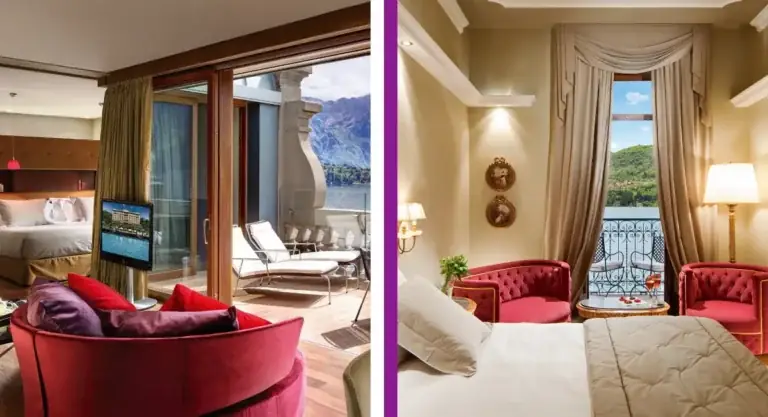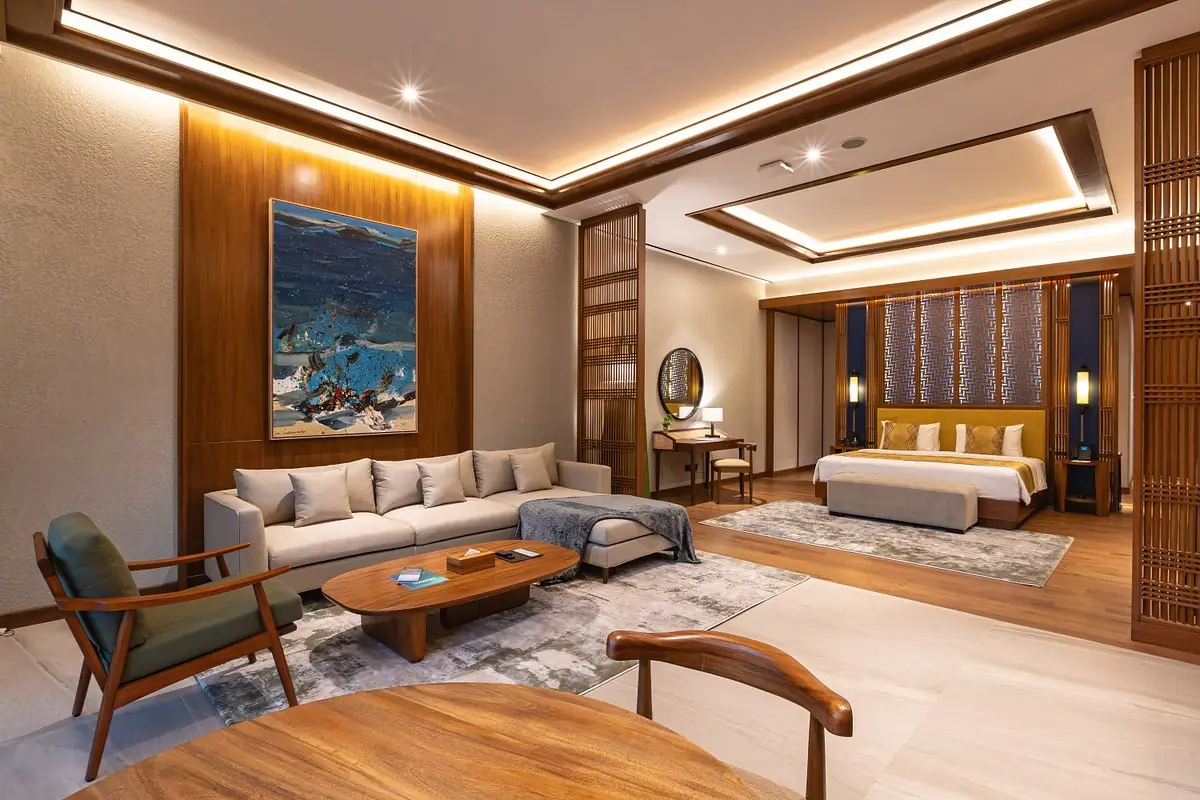
Best Luxury Suites for Executive Travel: Definitive Guide
The intersection of corporate mobility and high-end hospitality requires an extraordinary level of operational alignment. When multinational corporations and sovereign family offices deploy leadership teams into competitive global markets, standard hotel bookings frequently introduce severe security vulnerabilities and logistical friction. Executive travel directors must look far beyond aesthetic finishes to evaluate acoustic privacy, secure data transmission lines, and dedicated meeting infrastructure within elite accommodations. These top-tier spaces operate as temporary corporate headquarters designed to protect sensitive intellectual property while facilitating high-stakes negotiations.
Furthermore, the modern corporate landscape demands that elite properties provide seamless integration with private aviation networks, secure ground transport, and bespoke concierge services. A failure in any single component can compromise a multimillion-dollar merger or expose executive principals to unvetted public exposure. Therefore, curating premier corporate lodgings necessitates a rigorous, multi-layered analytical framework that treats high-end accommodations as critical corporate assets rather than simple leisure amenities.
Navigating this specialized procurement environment requires mastering the operational nuances of identifying and securing the best luxury suites for executive travel across global financial capitals and emerging regional hubs. Whether orchestrating a confidential board delegation in New York or coordinating a technology summit in Zurich, understanding spatial sovereignty and contract security remains paramount. Ultimately, this comprehensive guide delivers an objective examination of the administrative safeguards, structural typologies, and risk management strategies required to govern executive hospitality assets with absolute editorial precision.
Understanding “best luxury suites for executive travel”
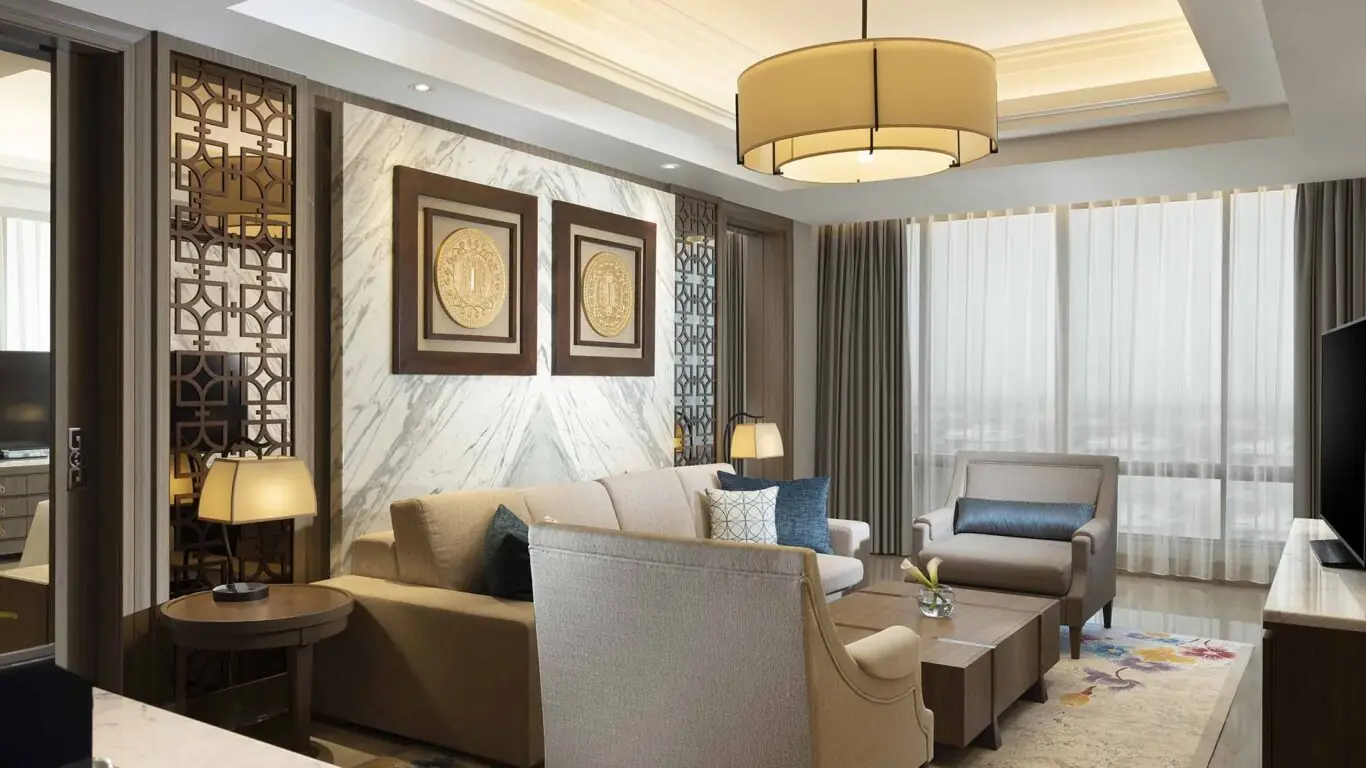
The phrase best luxury suites for executive travel is frequently co-opted by commercial travel aggregators and lifestyle blogs that reduce complex corporate asset evaluation to basic promotional rankings. Consequently, these superficial guides ignore the structural realities of hotel management contracts, proprietary corporate inventory holds, and unlisted high-security VIP allocations. In professional corporate risk management and executive travel curation, however, evaluating the best luxury suites for executive travel demands a rigorous examination of verifiable metrics. These metrics include dedicated secure fiber-optic bandwidth, soundproof acoustic barriers capable of withstanding industrial espionage threats, and private elevator access cores isolated from public foot traffic. A common misunderstanding assumes that any five-star presidential suite is inherently suitable for high-level corporate delegations. Consequently, planners frequently overlook how architectural vulnerabilities and shared service corridors expose sensitive executive discussions to acoustic and visual breach.
Analyzing these intricate hospitality markets requires understanding the systemic tension between commercial hotel profitability and confidential corporate governance. For instance, an analytical travel manager attempting to secure a multi-room penthouse in London or Singapore will find that standard booking channels display zero availability due to permanent inventory holds for diplomatic missions or premier corporate accounts. Planners who rely exclusively on public reservation portals routinely miss these critical inventory dynamics. Therefore, mastering the selection of the best luxury suites for executive travel involves examining how general managers, corporate security directors, and private concierges interact. Ultimately, this coordination establishes optimal booking pathways, transparent ancillary inclusions, and long-term asset value across vastly different regional markets.
Deep Contextual Background
The historical evolution of executive hospitality traces its roots to the grand railway hotels and transatlantic ocean liners of the nineteenth and early twentieth centuries, when industrial magnates and government ministers conducted state business while in transit. During this foundational era, luxury accommodations were designed to serve as floating or stationary administrative offices supported by private secretaries and domestic staffs. Consequently, spatial planning emphasized private salons, secure writing rooms, and segregated staff quarters integrated directly into the suite footprint.
Throughout the late twentieth century, the acceleration of corporate globalization and the rise of multinational conglomerates transformed executive lodging requirements. Properties shifted away from purely decorative Victorian layouts toward functional, technology-integrated environments featuring secure telecommunication lines, multi-bay meeting spaces, and ergonomic workspaces. Today, examining the corporate travel landscape requires navigating a mature, highly competitive industry where architectural pedigree, digital security infrastructure, and absolute perimeter discretion define the baseline of premier executive accommodations.
Conceptual Frameworks and Mental Models
Analyzing the operational excellence and spatial security of elite executive suites relies on several structured mental models:
-
The Acoustic and Digital Isolation Index: Measures sound transmission class ratings for partition walls and evaluates encrypted network security for in-suite telecommunications.
-
The Spatial-to-Delegate Ratio Matrix: Evaluates the functional capacity of private boardrooms and breakout rooms relative to the total number of traveling executives.
-
The Perimeter Security and Access Control Model: Assesses the presence of private elevator landings, biometric door locks, and segregated staff circulation paths.
-
The Ancillary Service Integration Gradient: Quantifies the seamless inclusion of private airport tarmac transfers, in-suite security sweeps, and dedicated executive butler support.
Key Categories or Variations
| Suite Typology | Primary Global Hub | Core Trade-Off or Constraint |
| Metropolitan Financial Penthouses | New York, Frankfurt, Tokyo | Centralized proximity to financial districts offset by elevated ambient noise and strict zoning limits |
| Secure Diplomatic Duplexes | Washington D.C., Geneva, London | Exceptional perimeter security and government-grade access controls balanced against high nightly tariffs |
| Integrated Business Resort Villas | Singapore, Dubai, Hong Kong | Expansive multi-bay working spaces and conference facilities offset by resort tourist traffic |
| Historic Heritage Suites | Paris, Vienna, Rome | Unmatched architectural prestige and salon capacity paired with legacy infrastructure and cabling limits |
| Contemporary Tech-Hub Residences | San Francisco, Seattle, Austin | Cutting-edge smart-room automation and fiber-optic networks offset by minimalist aesthetic constraints |
| Alpine Executive Retreat Lodges | Zurich, Aspen, Davos | Absolute seclusion and confidentiality for executive board retreats balanced against remote transit logistics |
When applying decision logic to these variations, corporate travel directors and executive assistants must align suite typologies with the explicit strategic objective of the deployment. Metropolitan financial penthouses suit high-frequency deal teams requiring immediate access to stock exchanges and legal counsel. Conversely, secure diplomatic duplexes and alpine executive retreat lodges attract executive boards prioritizing absolute confidentiality, data protection, and distraction-free strategic planning over urban convenience.
Detailed Real-World Scenarios
Securing a High-Security Penthouse for a Confidential M&A Delegation
A multinational financial institution coordinates a week-long merger negotiation in a major European capital, requiring a secure, controlled environment for sensitive document reviews.
-
Constraint: Standard hotel conference floors expose executive negotiations to public view, catering staff eavesdropping, and unsecured Wi-Fi networks.
-
Failure Mode: Relying on standard meeting rooms results in information leaks, compromised proprietary data, and severe regulatory exposure.
-
Decision Point: Secure a multi-bay penthouse featuring private keycard-locked elevator access, an isolated boardroom with acoustic dampening panels, and a dedicated encrypted local area network installed by corporate IT specialists.
Coordinating an Executive Board Retreat in a Secure Mountain Redoubt
A technology corporation organizes an annual strategic planning retreat for its executive board in a remote alpine region, requiring uninterrupted digital connectivity and complete privacy.
-
Constraint: Standard resort accommodations lack secure conference facilities and dependable backup power systems required for continuous digital modeling.
-
Failure Mode: Unexpected regional utility failures and local media intrusion disrupt critical board sessions and compromise strategic announcements.
-
Decision Point: Reserve a detached alpine executive lodge featuring dedicated satellite communication redundancy, subterranean parking for armored transport, and a private culinary team vetted by corporate security.
Planning, Cost, and Resource Dynamics
Executing a comprehensive corporate travel strategy focused on the best luxury suites for executive travel involves balancing premium nightly tariffs against the extensive array of included business support, security, and logistical assets. The economic model requires assessing indirect costs, such as private aircraft charter positioning, security detail accommodations, and legal contract reviews, against the baseline nightly room rate.
| Economic Variable | Financial Variability | Strategic Impact on Corporate Deployment |
| Base Nightly Suite Tariff | Extreme Market Variability | Direct corporate cash outlay covering spatial occupancy and core business amenities |
| Encrypted IT and Secure Network Installation | Fixed Project Surcharge | Guarantees compliance with corporate data protection policies and prevents espionage |
| Dedicated Executive Butler and Security Staffing | Fixed Daily Inclusion | Ensures immediate response times and absolute physical protection for principals |
| Private Aviation and Tarmac Ground Transfer | Variable Logistics Cost | Bridges the gap between international arrival and secure suite entry without public exposure |
Tools, Strategies, and Support Systems
-
Corporate Travel Management Platforms: Specialized software tracking executive itineraries, preferred property security ratings, and corporate rate agreements.
-
Encrypted Communication Gateways: Secure messaging and document-sharing applications linking traveling executives directly with property security directors.
-
Private-Client Security and Intelligence Feeds: Real-time geopolitical and civil unrest monitoring tools assessing safety risks surrounding booked properties.
-
Direct Property Sales and VIP Relations Directories: Maintained contact directories linking corporate planners directly to hotel general managers and directors of sales.
-
Tarmac and Helipad Coordination Desks: Specialized logistical teams managing direct helicopter and private jet transfers from regional airports to hotel landing pads.
Risk Landscape and Failure Modes
The primary operational hazard inherent in executive suite occupancy involves digital espionage and network vulnerability. When high-level executives connect corporate laptops to unencrypted hotel Wi-Fi networks or utilize unverified smart-room automation tablets, foreign intelligence services or corporate competitors can intercept sensitive financial data and strategic communications.
Another compounding risk relates to physical surveillance and acoustic leakage. Even the most prestigious properties can feature poorly insulated partition walls or unmonitored adjacent maintenance balconies that allow unauthorized observation during confidential meetings. Rigorous pre-arrival security sweeps and acoustic audits help neutralize these severe operational exposures.
Governance, Maintenance, and Long-Term Adaptation
Sustaining long-term excellence within corporate travel portfolios requires a disciplined administrative cadence. Corporate procurement departments must institute quarterly review cycles, auditing hotel partnerships against compliance metrics, security incident reports, and billing accuracy. If geopolitical risks shift or new cybersecurity regulations emerge, travel managers must update procurement protocols proactively.
Furthermore, corporate travel governance must adapt to evolving privacy standards, changing executive travel patterns, and emerging technologies. This involves maintaining ongoing dialogues with corporate legal counsel, upgrading encrypted communication infrastructure, and retraining administrative personnel in discretion protocols. Proactive governance safeguards corporate capital and ensures consistent safety across global deployments.
Measurement, Tracking, and Evaluation
-
Executive Satisfaction and Safety Index: Measures qualitative feedback from traveling executives regarding their sense of security, productivity, and comfort.
-
Service Latency and Response Time Metrics: Tracks the duration required for property staff to fulfill urgent administrative or culinary requests.
-
Digital Security and Network Integrity Audit Score: Evaluates the efficacy of encrypted in-suite networks and the absence of unauthorized data intercepts.
-
Budget Variance and Cost-Efficiency Ratio: Quantifies the financial performance of corporate suite bookings against allocated travel budgets and ROI metrics.
Common Misconceptions and Oversimplifications
-
Myth: Booking through a standard corporate travel portal guarantees that an executive suite meets all necessary security standards. Reality: Standard travel portals focus primarily on nightly rates and basic amenities, ignoring acoustic isolation and encrypted network infrastructure.
-
Myth: Five-star luxury hotels automatically provide complete confidentiality regarding executive guest identities. Reality: High staff turnover in luxury hotels makes formal non-disclosure agreements and private elevator access essential to protect executive privacy.
-
Myth: Standard hotel conference rooms within luxury suites are secure from electronic eavesdropping. Reality: Modern corporate espionage techniques require professional electronic counter-surveillance sweeps before any high-stakes merger negotiation.
-
Myth: Private butler service in an executive suite operates identically to traditional hospitality housekeeping. Reality: Executive-level butlers function primarily as administrative coordinators, security liaisons, and schedule managers.
-
Myth: High-end hotel suites are universally equipped with robust backup power and redundant internet systems. Reality: Many historic luxury properties suffer from aging electrical and telecommunications infrastructure that can fail during critical meetings.
-
Myth: Corporate travel risk management ends the moment the executive checks out of the hotel suite. Reality: Post-stay invoice audits, digital data purging, and security debriefs are critical to prevent lingering vulnerabilities.
Ethical, Practical, or Contextual Considerations
Evaluating elite corporate accommodations also intersects with broader governance discussions surrounding corporate expense transparency and shareholder accountability. As multinational corporations allocate substantial capital toward executive protection and luxury lodging, institutional investors and compensation committees occasionally scrutinize these expenditures. Progressive corporate governance frameworks address these concerns by tying luxury suite allocations directly to verified security threats, high-stakes transactional value, and measurable productivity gains during critical business deployments.
Conclusion
Mastering the complexities involved in identifying, securing, and governing elite accommodations for high-level delegations requires an uncompromising analytical perspective. True authority in this domain involves looking past promotional marketing imagery to examine acoustic engineering, encrypted network infrastructure, and perimeter security controls. By approaching corporate accommodation management with professional rigor and intellectual honesty, travel directors and asset managers ensure that their deployments deliver absolute security, operational excellence, and enduring value.